
Figuring out how to use AI in our creative process has been messy.
Sometimes it feels like pure magic. You type a few words, hit enter, and the output is so good it makes you question everything you thought you knew about content creation.
Other times it spits out something that sounds like a detergent ad from 1997. It is corny. It is rigid. It completely misses the mark of what a modern brand needs to sound like.
When we started diving into AI at Laundry Sauce, the noise was deafening. Every guru on the internet was screaming that you could fire your whole creative team and let a robot run your marketing. That is BS. If you try to fully automate your brand, your customers will smell it from a mile away.
We realized pretty quickly that AI is a tool, not a replacement for good taste. The challenge was figuring out exactly where it fit into our workflow without pulling us away from the reason we built Laundry Sauce in the first place.
Here is how we have started to break it down. We use a three-tier framework to keep things organized.
100% AI Creative
This is the wild west tier. We use this strictly for quick ideas, fast visuals, and wild experiments.
When you just need to get unstuck, 100% AI is incredible. It is great for speed. You can brainstorm fifty different concepts in five minutes. You can visualize a completely absurd idea just to see if it sparks something real.
But it usually needs a human to stop it from feeling goofy.
If you publish raw AI output, you are going to look cheap. The robots do not understand nuance yet. They do not understand the subtle differences in brand voice. They just predict the next most logical pixel or word. That is why we keep our 100% AI work behind the scenes. It is our sandbox. We play in it, we test things out, but we never let the raw outputs touch the customer directly.
50% AI and 50% Human Creative
This is the absolute sweet spot.
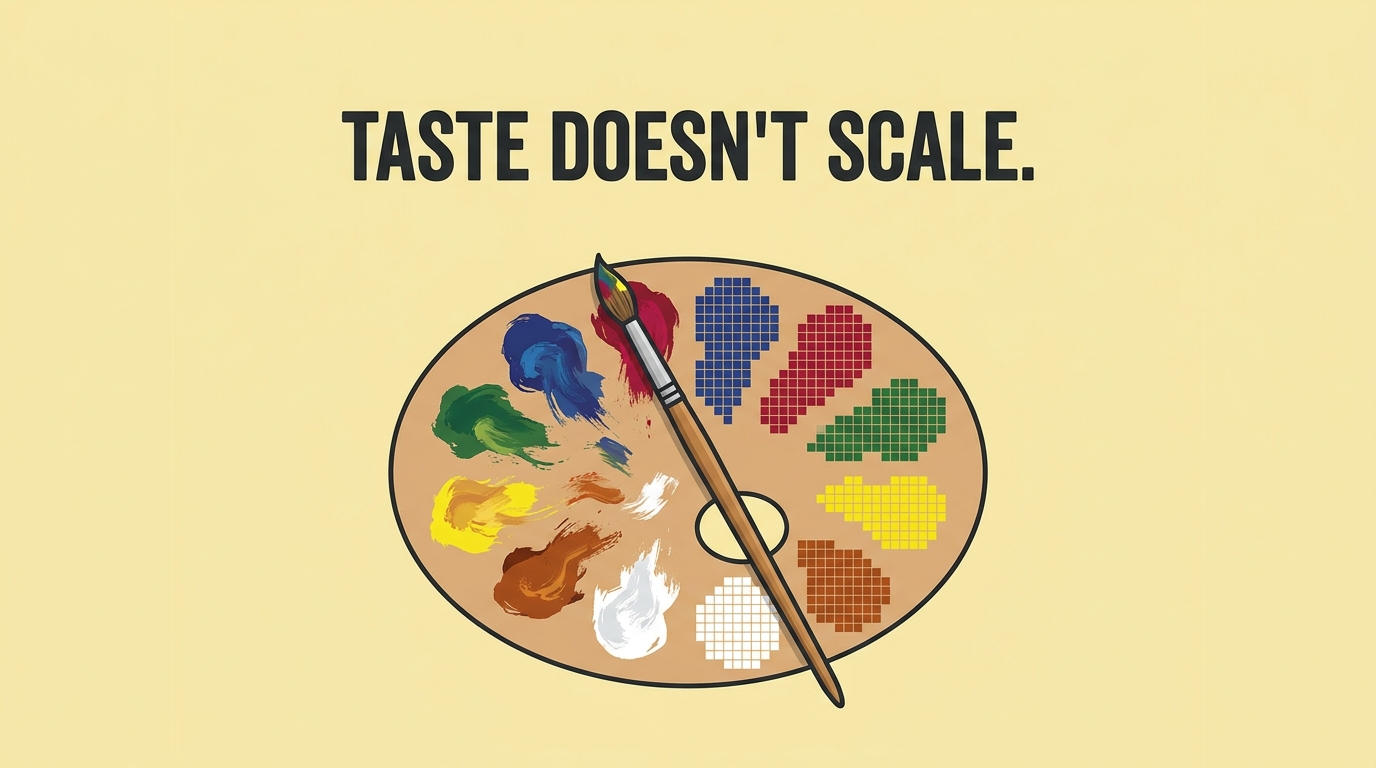
AI gives us the volume. Our team gives it the taste.
In this mode, we treat the AI like a junior designer or a first-draft copywriter. We give it a strong direction and let it do the heavy lifting of getting from zero to sixty. It builds the foundation.
Then our actual human team steps in. They take that raw material and refine it. They tweak the colors, adjust the copy, and inject the actual Laundry Sauce personality into the asset. Together, it feels like something worth sharing.
Taste is the ultimate competitive advantage right now. Anyone can generate a thousand images a day. But knowing which one of those images actually resonates with your customer takes a human being. The 50/50 split allows us to move incredibly fast while maintaining a relentless focus on excellence.
10% AI and 90% Human Creative
This tier is where we find the most practical, day-to-day value. It is all about the little things.
We use this for cleaning up copy, resizing assets, or reformatting text for different platforms.
It sounds boring compared to generating wild new visuals, but these mundane tasks are exactly what burn out good creative teams. By handing that 10% over to the machines, we save hours of manual labor every single week.
More importantly, it keeps the team focused on higher-level creative work. Your best people should not be spending their afternoon clicking and dragging borders to make an Instagram square fit into a TikTok vertical. They need space to think. They need time to figure out how to actually move the needle for the business. Let the robots do the chores.
Two Tools Moving the Needle
The software landscape right now is overwhelming. We try to keep our stack lean. Two tools have been absolute game-changers for us recently:
- Nano Banana: We got access to this through Freepik, and it lets us transform any image with simple text prompts to test visuals fast. Instead of guessing, we build rapid mockups where we kill the terrible ideas and send the promising ones to the human team, removing friction from the testing phase.
- ChatGPT: Everyone uses this, but most people use it wrong, which is why we run all my prompts through here to refine them before hitting generate anywhere else. If your prompt is weak, your result will be a 1997 detergent ad, so we use this as a filter to tighten our logic, expand our descriptions, and clarify our intent.
Keep Testing
I do not think anyone has this all figured out. Us included.
The playbook is cooked and the rules are changing every single week. Right now, we are just testing, learning, and trying not to drown in AI outputs.
You have to stay scrappy if you want to win in this environment. Keep experimenting. Keep pushing the boundaries of what these tools can do, but never forget that your brand soul comes from the people building it.
If you are running a brand, where has AI actually helped you? Where has it just wasted your time? Drop a comment below. I want to know what is actually working for you.